
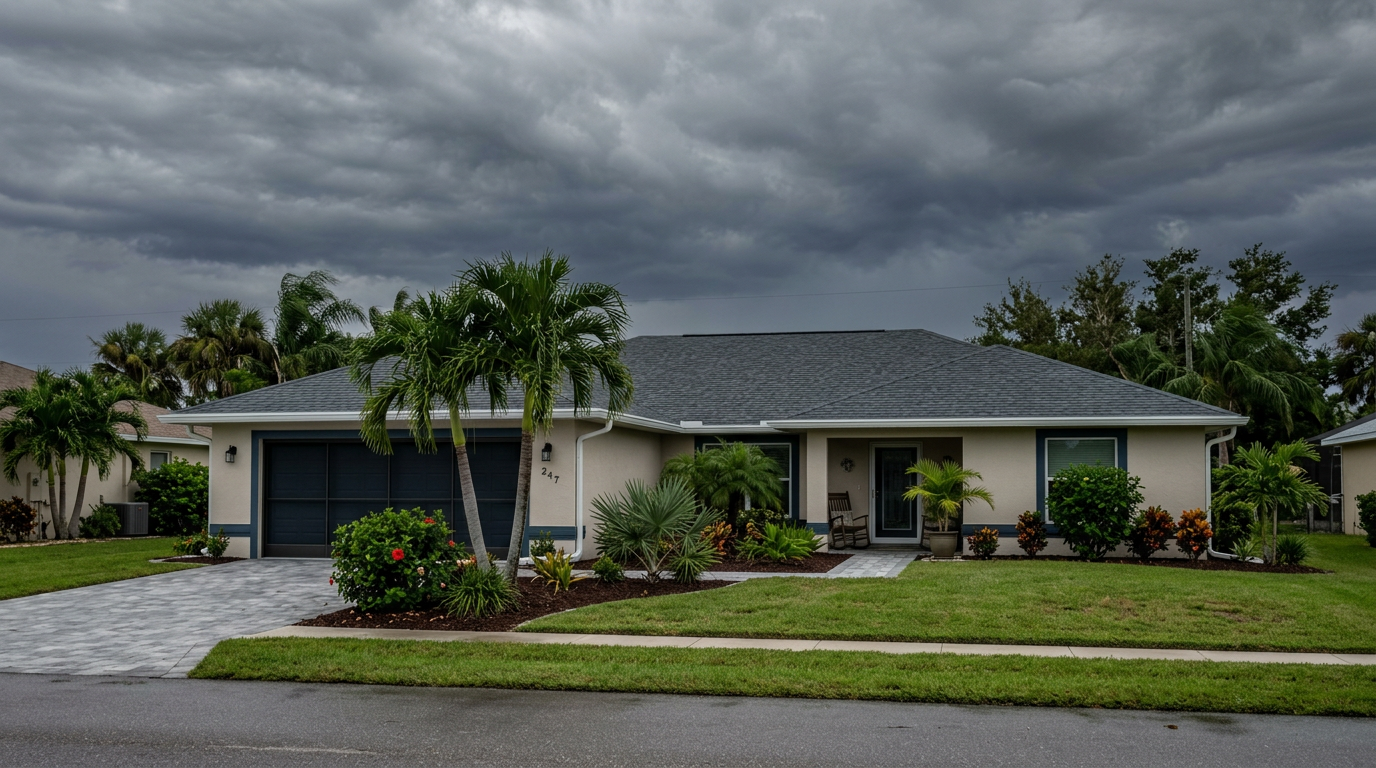
Atlantic hurricane season runs from June 1 through November 30, and in Southwest Florida even a storm that never makes landfall can bring hours of wind-driven rain. Your gutters are the first thing standing between all that water and your foundation, your landscaping and your roofline.
A gutter system that’s clogged, sagging or loosely attached can’t move water fast enough when it matters most. Here’s how to get your gutters, downspouts, soffit and fascia ready before the next storm, and what to check once it’s passed.
Key Takeaways
- The Atlantic hurricane season in Florida runs from June 1 to November 30, and proper gutters are essential to protect your home.
- Check gutters before storms by clearing debris, inspecting for sagging, and ensuring downspouts direct water away from the foundation.
- After a storm, look for any damage to gutters, downspouts, or fascia to prevent future issues.
- Seamless gutters, proper sizing, and secure attachments enhance storm readiness, while gutter guards prevent clogs during heavy rain.
- Request a free storm-readiness estimate to ensure your gutters are prepared for the hurricane season in Florida.
Why gutters matter so much in a tropical storm
A tropical system can drop more rain in an afternoon than a typical week brings. When gutters can’t keep up, water spills over the front edge or backs up behind the gutter. That’s when you see:
- Water pooling along the foundation, which can soak into slabs, stain walls and wash out landscaping
- Water running behind the gutter, where it soaks the fascia board and starts rot
- Overflow onto lanais, pool decks and entryways
- Gutters pulling away from the house under the weight of standing water and debris
A clear, well-attached gutter system moves that water off the roof and away from the house, which is exactly what you want when the rain won’t stop.
Before the storm: your gutter checklist
Do these while skies are clear. Never climb a ladder once the wind picks up.
1. Clear gutters and downspouts
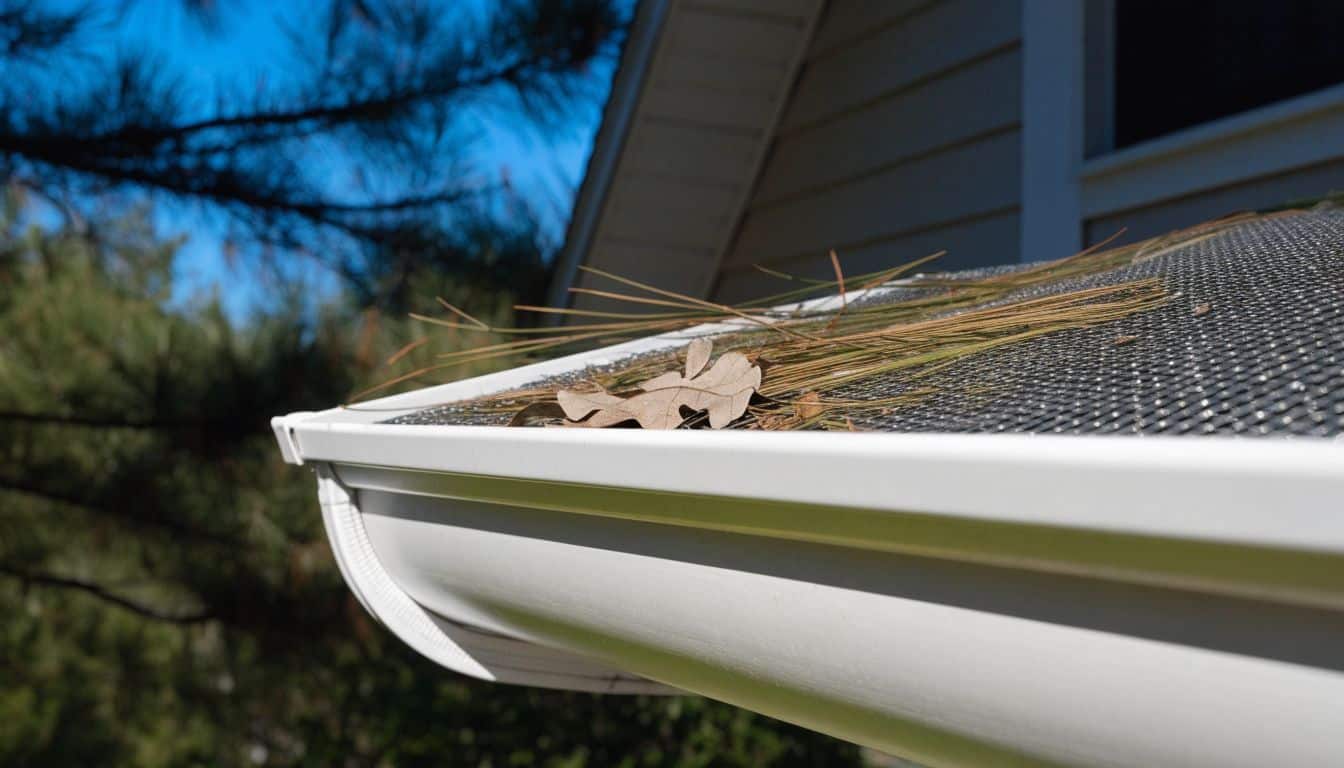
Remove leaves, pine needles and grit from the gutters, and make sure each downspout drains freely. A clogged downspout turns the whole run into a bathtub. If you have gutter guards, brush off anything resting on top of the mesh.
2. Look for sagging or loose sections
From the ground, sight along each gutter run. Dips, gaps between the gutter and the house, or hangers that have pulled loose are weak points in high wind.
3. Check every downspout connection
Make sure downspouts are firmly attached to the wall and to the gutter outlet. Loose downspouts can detach in a storm and leave water pouring straight down beside the foundation.
4. Point the water away from the house
Downspout extensions or splash blocks should carry water several feet away from the foundation, not dump it at the base of the wall.
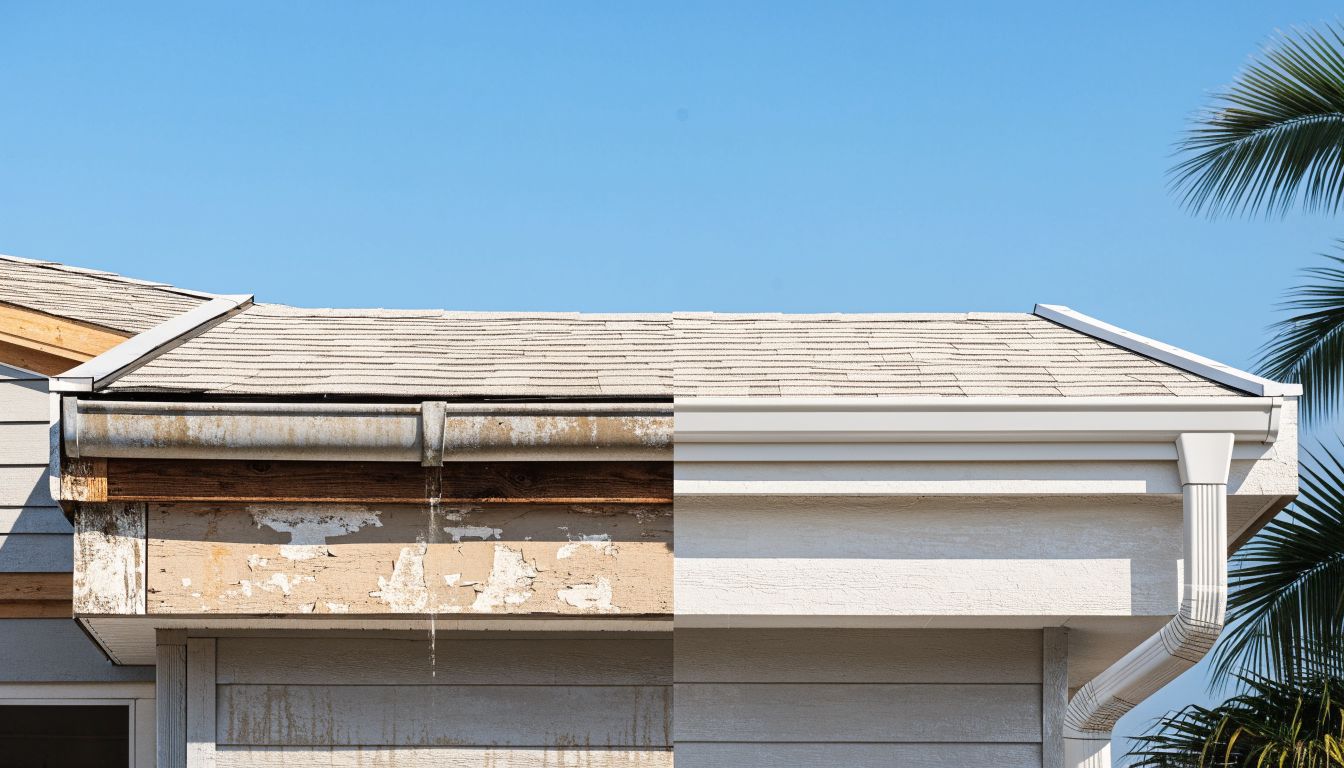
5. Inspect soffit and fascia
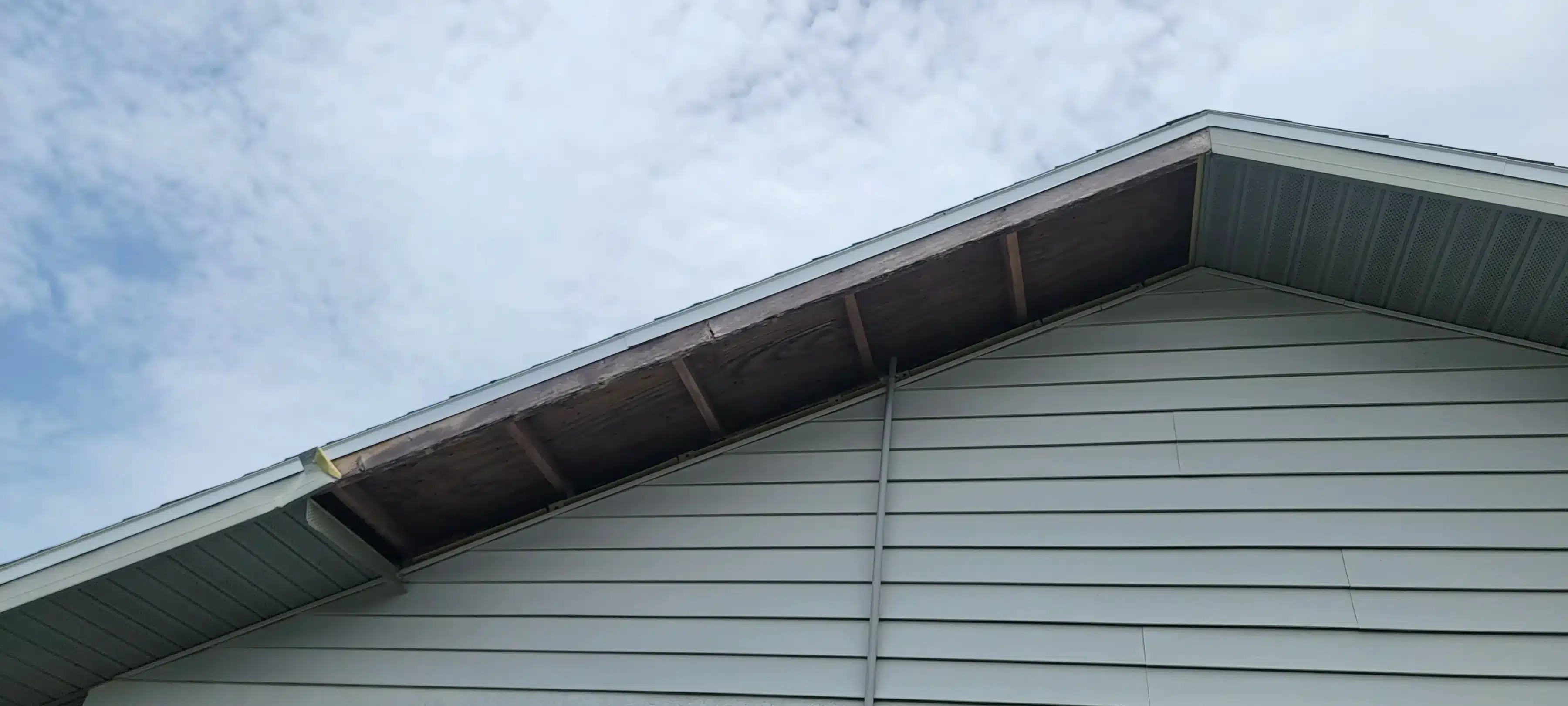
Look for peeling paint, soft spots, gaps or loose panels along the roof edge. Damaged fascia can’t hold gutters securely, and loose soffit can tear off in high winds or let wind-driven rain into the attic. Learn more about the signs of soffit and fascia damage.
6. Trim overhanging branches
Branches over the roof drop extra debris during a storm, and broken limbs can crush a gutter run. Trimming them back ahead of time reduces both.
7. Take “before” photos
Photograph your gutters, downspouts and roofline from each side of the house. If you need to document storm damage later, having clear before-and-after photos makes it much easier.
After the storm: what to look for
Wait until the storm has fully passed and it’s safe to be outside. Then walk the property and check from the ground:
- Bent, sagging or detached gutter sections
- Downspouts that have come loose or are dumping water next to the house
- Debris piled in gutters or on top of guards, which can cause overflow in the next round of rain
- Missing or loose soffit panels, which can let birds, rodents and insects into the attic
- Water stains on walls or fascia, a sign water got behind the gutter
Photograph anything that looks damaged before it’s moved or repaired. If you’re filing an insurance claim, we provide written, itemized estimates you can submit with it.
What makes a gutter system storm-ready
If your gutters are due for replacement, these are the features that matter most in Florida weather:
- Seamless construction. Seamless gutters are formed in one continuous piece for each run, so there are no seams along the length to separate or leak. Read more about our seamless gutter installation.
- The right size. We install 6-inch K-style gutters as standard because they move more water than 5-inch gutters, and 7-inch gutters for large or steep roofs.
- Secure attachment. Our systems use hidden hangers along the gutter and commercial-grade 3 × 4 downspouts fastened with hidden clips and hurricane anchors.
- Solid fascia behind it. A gutter is only as strong as the board it hangs on. Aluminum fascia won’t rot the way painted wood can.
- Gutter guards. Micro mesh guards keep pine needles and storm debris out of the gutter so it can keep flowing during heavy rain. See how gutter guard types compare.
Should you take gutters down before a hurricane?
No. Properly installed gutters are meant to stay up and do their job during a storm. Taking them down leaves your foundation, fascia and landscaping with no protection from the rain. The better plan is to make sure they’re clear, secure and in good repair before the season’s peak.
Frequently Asked Questions
Simply reach out to our team, providing us with your vision, and we will swiftly develop a plan that will transform your dreams into lasting memories.
When is hurricane season in Florida?
The Atlantic hurricane season officially runs from June 1 through November 30 each year.
Can you repair storm-damaged gutters, or do they need replacing?
Many storm-damaged gutters can be repaired, including bent sections, loose hangers and detached downspouts. If damage is widespread or the gutters were already failing, replacement may make more sense. We’ll tell you honestly which one fits. As such, our lifetime warranty only applies to all-new installations.
Do you provide estimates I can use for an insurance claim?
Yes. Our estimates are written and itemized, and we can provide project documentation on request.
Which areas do you serve?
Southwest Florida from Sarasota and Lakewood Ranch down to Naples, including Port Charlotte, North Port, Venice, Wellen Park, Punta Gorda, Babcock Ranch, Cape Coral and Fort Myers. See our full list of service areas.

Need further assistance?
Need help finding the answers you need? Let’s have a conversation.
Get a free storm-readiness estimate
Not sure your gutters are ready for the next storm? We’ll inspect your gutters, downspouts, soffit and fascia and tell you exactly what needs attention, with no obligation. Request your free estimate online or call Port Charlotte at (941) 310-2222 or Cape Coral at (239) 888-2303.
Let’s Talk
Contact Us
Not sure your gutters are ready for the next storm? We’ll inspect your gutters, downspouts, soffit and fascia and tell you exactly what needs attention, with no obligation. Request your free estimate by fill out this form, or call our Port Charlotte office at (941) 310-2222, or our Cape Coral location at (239) 888-2303.
Free Quotes – Contact Us
"*" indicates required fields
Leave a Reply